(5 May 2020) There has been much in the media recently on testing for Covid. It does not seem to be going as well as it should though, in consolation, limited coverage of VE day in the press, which though important, would have been far too prevalent.
If the Germans had won it would probably have not been very nice but they would have sorted out this testing. I am uncertain why we have the most deaths in Europe
Continuing on testing I remain puzzled why the government do not carry out some random testing of a large sample of the population. This would provide more solid evidence for the next steps i.e. to understand:
What % of the population have it- even with limited or non-existent symptoms
What % have had it as shown by the presence of anti-bodies- and are thus immune for at least a while
What % could potentially get it.
This would help greatly in developing the next steps.
Key Workers. My internet service was down recently but yesterday two nice engineers came along and fixed it by working on a box in the next street- a blockage in the internet pipe or something. I was grateful that they were designated “Key Workers” (KW)
I ruminated on this having had milk delivered in the morning by a KW, my refuse taken away (not by the milkman) another KW brought the post and then, while walking the dog, noticed that some others had cut the grass in the recreation ground and were emptying the bins, while the local shop was busy. Then a train rumbled by on the nearby railway line. With restored internet I then had an email from a social worker who was pleasant, helpful and also working hard
So, in a complex society every job seems important to keep the ever threatening chaos at bay. But then I wondered if every single job was actually needed in a sane society. Who are the Non-Key workers we could do without?
I have started a list with two suggestions- perhaps my readers could add some more
Jobs that Need Not Exist:
“Hedge Fund Manager” – not privet related. A Hedge Fund is an offshore investment fund, typically formed as a private limited partnership, that engages in speculation using credit or borrowed capital.
I.E. they make money for the rich, while being very well paid themselves through complicated, obscure financial transactions which benefit only themselves and their investors- not the population at large. If they get it wrong, they have limited liability so they are not responsible for the losses.
Jacob Rees-Mogg owns 15% of a Hedge Fund.
“Tax Avoidance Expert” Everything they do is completely legal but uses a combination of loopholes in the complexity of the tax system along with the use of off shore companies and all that. The only serve to help the rich keep more of their money and deprive the government (i.e. us) of money for much needed public services.
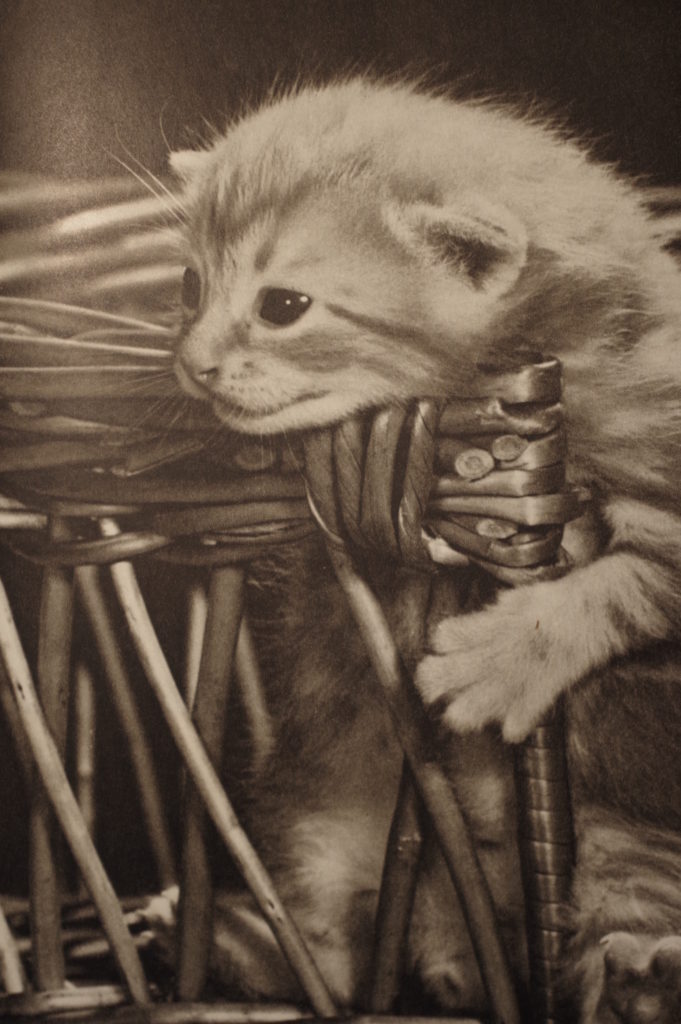
I could rant on for ages- to cheer me up here are three nice kittens.
(29 April 2020) A spring in my step today as I share the nation’s joy at another child for the prime minister. I think it’s his sixth though I remain unsure.
Another bounce in my spring was that I wrote to Ofgem about the iniquity of the standing charge on energy bills. They sent back a clear and helpful response- see below (with key part underlined)
“Dear Keith,
Thank you for contacting Ofgem.
Standing charges are fixed amounts applied to your energy bills to cover fixed costs such as administration fees, provision of a meter and connection to the network, however it is not mandatory for suppliers to charge a standing charge.
Ofgem’s role does not extend to setting energy prices, including the standing charge; energy prices are determined by the suppliers themselves based on their assessment of the wholesale and retail markets. It is up to energy companies themselves to explain their prices changes and profits to their customers.”
Thus, the “Standing Charge” is basically a rip off which penalises the lightest/poorest users of energy (contrary to what is desirable) and makes it totally confusing for users to compare properly the rates from different suppliers. When public attention returns to the “new normal” it might be time to start a campaign.
The final spring bounce, which almost broke social distancing, was in a local supermarket (Morrisons). As I trudged around the shop noticing that everyone was socially distancing themselves from me to the point where minor paranoia crept in, I passed the baked beans-which last week had been unnecessarily plastic wrapped.
There is obviously someone from Morrisons amongst my tens of readers- the four packs of beans-still at the same remarkable value, were encased in flimsy cardboard. One small step etc.
(21 April 2020) Stumbling out of isolation and blinking in the harsh sun as I went on a search for marrowfat peas I started thinking about Jacob Rees-Mogg which was perturbing and one I will return to on another day. (We haven’t heard from him in a while, I hope he is all right).
I succeeded in my task at a local supermarket; thus, emboldened I went in search of tinned goods. They had tomatoes and baked beans (in separate tins). I bought some.
This is not interesting but the rant is about Unnecessary Packaging particularly Plastic.
The tomatoes were 30p each or four for a quid. All loose tins.
The beans were the same price but wrapped in quite strong plastic which was not recyclable so will be off to landfill.
The till, once it counted four tins of tomatoes, knocked 20p off my bill.
It could have done the same with the beans so there was no justification at all. One piece of plastic but it would only require 3,000 of them to pointlessly cover the pitch at Wembley (a football stadium for my continental readers).
The supermarket has over 450 stores so assuming all these baked beans are snapped up (- it was an attractive price) then this unnecessary wrapping would more than cover the football pitches of all the professional pitches in the UK. This is probably not right.
This was a small thought so to eke out my precious and diminishing supply of kittens here is a plant.
(16 April 2020) There has been much talk about economics this week along with the unknown rising death rate.
With no supermarket delivery slots available I am trudging to the shops and standing in Soviet style queues, reflecting on economics. These are some things that puzzle me.
Tesco are doing a good job, I am sure, of “feeding the nation” and are enjoying good sales.
The government have said that they won’t have to pay £538 million for business rates. Fair enough. However, they are distributing £630 million to shareholders. I guess some clever people understand how this makes sense though I wonder what happened to “The value of your investment can go down”.
“Growth / Gross Domestic Product (GDP) is predicted to severely diminish. This makes sense if you think of a company that make tangible things from lumps of metal.
However, consider someone who, when at work, every lunchtime, goes to a sandwich chain for a flesh/dairy/plant based alternative sandwich, As a creature of habit they do this every day- so £25 a week for 40 weeks a year -spending £1,000. In a UK workforce of well over 30 million people it is not unreasonable to imagine one million people doing this- spending in total one thousand million pounds (or a billion as it is now known).
Nevertheless, at a guess, all these people probably are still eating lunch in these locked down times. Maybe they are making their own sandwiches say at an average cost of £2, thus spending 60% less or £600,000,000 off GDP. So, GDP falls, but everyone is still eating a sandwich. We are no worse off as unpaid work does not count in the statistics. I will return to this later.
Finally, the government are giving people forced out of work by the crisis some money to help them. This is admirable although a better organised society would have a Universal Basic Income system in place anyway. I have worked out my scheme for this but it is a bit complicated so I need to refine it until it becomes comprehensible.
The government are also helping companies. However, these are private companies so I would hope that if the government (who work for us) provide cash to help them out they should do so in exchange for shares in the company. Should better times return the dividends could be used, for example, to invest in worthwhile efforts such as those that help mitigate environmental ill effects, clean energy etc. (I am not sure if they will though).
Where does all this money come from? An interesting sleight of hand. The government say
“Can anyone lend us £50 billion? – here are some bonds stating we will pay it back some time”.
The Bank of England then says
“We will” and the Governor sends someone down to the basement to print £50 billion. These are delivered to the government who give them to people who go out and buy necessities including sandwich ingredients. Magic really.
When things get better the Governor of the Bank of England could meet the Chancellor of the Exchequer- probably in some traditional club with gigantic armchairs and leather butlers. The Chancellor tells the Governor that it is a bit tricky to give the money back as they want to use the cash they have got for the NHS, Local Councils etc.
“That’s all right mate” says the Governor, “I’ll just chuck the bonds in this nice fire and we’ll say no more about it”.
(9 April 2020) I have just gone through the irritating process of switching energy suppliers, sparking off a number of thoughts.
When a supplier phones or accosts me in the street they always claim to reduce my bill.
They want to know who my current supplier is and then they make up a figure to save me money. However, they (and I have had argument with the street people about this) refuse to tell me how much they are actually charging. It is quite simple- there is a per kilowatt hour cost and a daily standing charge. This is what one needs to know but they won’t tell me.
It is like someone telling me they can save on my supermarket bill by asking me who I shop with without telling me what they charge for apples.
You can find these out if you bother to delve into the depths of a company’s website.
I realised then that the energy market is one from the list of The Bad Things we are lumbered with from Thatcherism.
There are now over 60 companies who “supply” i.e. just bill you, for energy. This complication is bad enough but there are also over 75 companies who offer an energy broking service or switching service to help one through this unnecessary maze.
While I am sure all the individuals who work for these companies are decent human beings and are kind to their pets, a sane and organised society would not need all these- they are an example from the list of Totally Pointless and Unnecessary Occupations.
Energy Board -In practical terms there has to be an organisation that gets the gas and electricity to your home- all the others are pointless. We could, for example, as we live in a democracy (so the government works for us) have a body for each region. Thus, in London we could have the London Energy Board, open, transparent and with some elected representation. Instead London is controlled by EDF a French company for example and in Scotland, Scottish Power is obviously Spanish owned.
Unfair Pricing- We are all aware of climate change and the need to reduce energy consumption. Yet our current system, as well as being almost incomprehensible, discriminates against poorer households.
The best deals come from using direct debits, however, estimating conservatively, about a third of the population live in poor households with low and / or irregular income and cannot set up direct debits. So, they are charged extra for monthly billing or- even more if they have to have a pay meter.
Then there is the standing charge, quite wicked because it is fixed irrespective of usage so that those who use less pay a higher unit rate. It is a regressive charging system.
I did some sums- just for electricity though the same principle would apply to gas. I assume that the Kilowatt pe hour (KWH) rate is 15p. The daily standing charge is 30p (all the companies quote fractions of pennies as it makes it far more difficult to work out with mental arithmetic) and according to OFGEM (a regulator who probably do a good job but would not be needed under democratic control) a typical household uses 4,000 kwh a year.
So, for this household, adding on the standing charge and working out the unit rate, this average household pay 18p for each unit.
A poorer household, using half this amount pay 20p a unit.
A prosperous household – perhaps with an electric jacuzzi, use double the average and pay 16p a unit thus paying 20% less for what they buy.
The justification for the standing charge is that it covers fixed costs of providing the supply- meter, holes in road, pipes etc. Nevertheless, as users are also billed for what is used there is no actual justification in it being so high.
I took my sums and boosted the KWH rate to 17p and reduced the annual standing charge to a modest £12 pa.
This working out keeps all at an actual rate of 17p per unit (the average paid by households using 8,000, 4,000,3,000 and 2,000 collectively) although the bottom group still average 18p, the rest 17p but, significantly only the household with the most consumption pays more (£62.50), the others pay increasingly less with the poorest saving £57.50 pa.
(I show the sums at the end of this piece).
So, the first part of my Practical Manifesto for a Slightly Better Future is Reduce the Standing Charge to a Minimal Figure.
But, as the TV shopping channels say, there is more.
If we want to be an inclusive society, we should recognise that all should have access to basic utilities.
I wondered therefore about Making a Certain Quantity of Energy Free.
I did a sum assuming that all households got 570 free units each year. (an odd figure but for the example this generates as much revenue as the current model -actually £4 more)
I put the unit rate up to 20p.
Calculating this way means that the average price of a unit increases along with consumption, a feature that can only encourage energy saving.
On this model, comparing it with the current example above, the average household get a tiny reduction, the poorest still save over £100 a year (which they would possibly spend on energy) and those who consume the most pay £188 more. Further those who consume the most pay an average unit price of 19p while those who use the least only average 15p.
Practical? Easily – once details are worked out give this would apply both to gas and electricity so consideration would be given to allow for single fuel households and I do not think second homes should be eligible for example. There could also be some recognition of the number of people in a household.
(6 April 2020) As
lockdown continues the tedium increases; having to shuffle out to the shops as
I can’t get my normal regular grocery delivery while trying to avoid a small
chance of catching a disease that could prove fatal.
Over the last year I have not been using the usual
basic software for writing etc but online and freeware. It is all perfectly adequate for my modest
needs but it is awkward, like being in a rented holiday home- you know the
stuff is there but it is not in the place one is used to.
So, I recently (through an absurdly cheap legitimate
online deal) acquired proper Word and Excel etc. It has been very comforting
and using it has been like coming home.
Thus, thank you Microsoft, though people malign you your software does run over 90% of the world’s computers. (Twenty years ago, the United Nations could have created a universal freeware for this, sadly they did not seem to get my letter).
(30 March 2020)it has been a couple of depressing weeks as the country locks down. As I take my prescribed compulsory healthy walk I see a jogger at a crossroads. The road is empty but I cannot avoid the impression that at any moment a stumbling horde of the infected will be chasing after him.
I comfort myself
with a healthy but dull salad then make it perfect by piling
mayonnaise all over it which somewhat reduces the healthy eating
cachet.
So I got to thinking about mayonnaise, a delicious product and one where the brand leader is actually the best. However given that the suggested portion size is absurdly minuscule and a sensible one is quite a lot, regular consumption would be an easy route to obesity.
Thus eating the good
stuff should be an occasional treat.
This is a problem
for the manufacturers who would like the public to eat it more
frequently but still be capable of getting off their sofas.
So they invent a “Lite” version (I suspect the universal refusal to spell it properly is indicative of their secret shame) and to make it low in fat churn up several unusual ingredients(defined as ones you won’t have in your food cupboard) See the difference below.
Proper
Version
Inferior
Version
Rapeseed
oil (78%)
Water
Water
Spirit
vinegar
Pasteurised
free range egg and egg yolk (7.9%)
Modified
corn starch
Spirit
vinegar
Sugar
Salt
Pasteurised
free range egg and egg yolk (4.0%)
Sugar
Rapeseed
oil
Lemon
Juice concentrate
Salt
Antioxidant
-calcium disodium EDTA (Ethylenediaminetetraacetic
acid)
(as
a medicine it is used to treat lead poisoning and is recognised as
being very safe)
Cream
Powder
Flavourings
Citrus
Fibre
Paprika
extract
Colours
(carotenes, titanium dioxide E171 sourced
from ilmenite, rutile, and anatase
Thickener
(xanthan gum E145 derived
from the fermentation of a bacteria anthomonas
campestris, which also causes black rot on leafy vegetables)
Flavourings
(contain milk)
Preservative
(potassium sorbate E202)
Lemon
juice concentrate
Antioxidant
-calcium disodium EDTA
So this is a perfect example of The Chicken Theory in action- rather than having a nice treat now and again it appears lovely to frequently guzzle on inferior substitutes (and sell a lot more jars).
(13 March 2020) Not much more to say on Covid-19 except my
paper said that 80% of us will get it and half a million will die.
Which is a bit worrying.
However today I want
to praise the NHS.
I had a cataract
operation this week- at an outpost of Moorfields at a local hospital.
It seemed to go well and all the staff were extremely courteous and
professional. Inevitably, and quite reasonably, they had a session
that processed six people in a batch so I was there a few hours.
Nevertheless, it was still at no cost to me other than a cab home. In the USA it would have cost at least $4,000 and possibly more if it was complicated. So much and many plaudits for our glorious NHS.
However my rant is about one of the patients who complained bitterly about not being first on the list (they actually prioritised the order so the people who appeared quite ill went first), not appreciating what they were getting. It demonstrates the false expectation of entitlement and one I will return to in future posts. Sadly I did not remonstrate with him as he had someone with him who was also angry and had many more muscles than those that protrude from my body.
This whole story is starting to dominate the news. I have two thoughts. First, shortages in the shops demonstrate how fragile modern society is. Let’s say I buy one particular thing every weekly shop at the supermarket. Panicked by the newspaper headlines, it is quite rational of me to buy two of them when I shop. However if everybody does that a variant of that hundred per cent increase in demand will inevitably cause shortages.
The story of the shortage causes further panic and people start buying more things. Then there is a shortage. Then people start profiteering. The moral of this is to be sensible though I am not sure everybody will be.
A second thought is one of puzzlement. It is quite clear how the virus originated, it is a zoonotic infection. But a surprising number of people fuel the Internet with strange conspiracy theories. This leads to more panic and more worry. Therefore, what puzzles me, is why so many people are prepared to believe anything but the ordinary mundane truth. Here are a couple of links for some simple debunking.
This whole story is quite scary as one begins to wonder whether it will be the event at the beginning of the end, a precursor of it or just another bad thing.
Those of us who watch post apocalyptic movies particularly, will be struck by the similarities to a zombie movie. Over the opening credits you see newspaper headlines and ticker-tape under the news; it starts with a case or two here or there, there is the first death, it spreads to other countries and then quarantine kicks in. Then tipping point is when the infected break out of quarantine and start to rampage. I believe the government are, or probably should be, making plans to cut off the Wirral Peninsula.
However the most serious point and the one we would all like to know, is what chance one has of dying if one contracts the virus.
The winter flu, with which we are all familiar, has a death rate of roughly one in 10,000 cases. This figure came from a serious and impenetrable American website; it does the calculations and is useful if you understand statistics. American Statistics Public Health England also publish an annual lengthy report which you might find interesting though it does not seem to spell out the odds of dying from Flu. http://Flu Report 18-19
Of course, for the winter flu many people are vaccinated which is not the case in the current situation, so crudely, with around 60% of over 60s vaccinated we could double the rate to two in 10,000 cases.
So to repeat what are the odds of dying from COVID-19?
The BBC, helpfully, have this information in a drop-down menu at the bottom of the page below, (the bit people don’t usually scroll down to) BBC story If you are healthy then they quote 0.9% or crudely 90 in 10,000 cases but for the elderly, vulnerable or ill it rises to 11% or roughly one 1,100 in 10,000 cases. So it seems we should not ignore it, take the sensible hygiene precautions and, in my view, ensure you have enough food at home to ensure you for can self isolate for up to three weeks. Bit grim but here’s a picture of a kitten to cheer you up.